
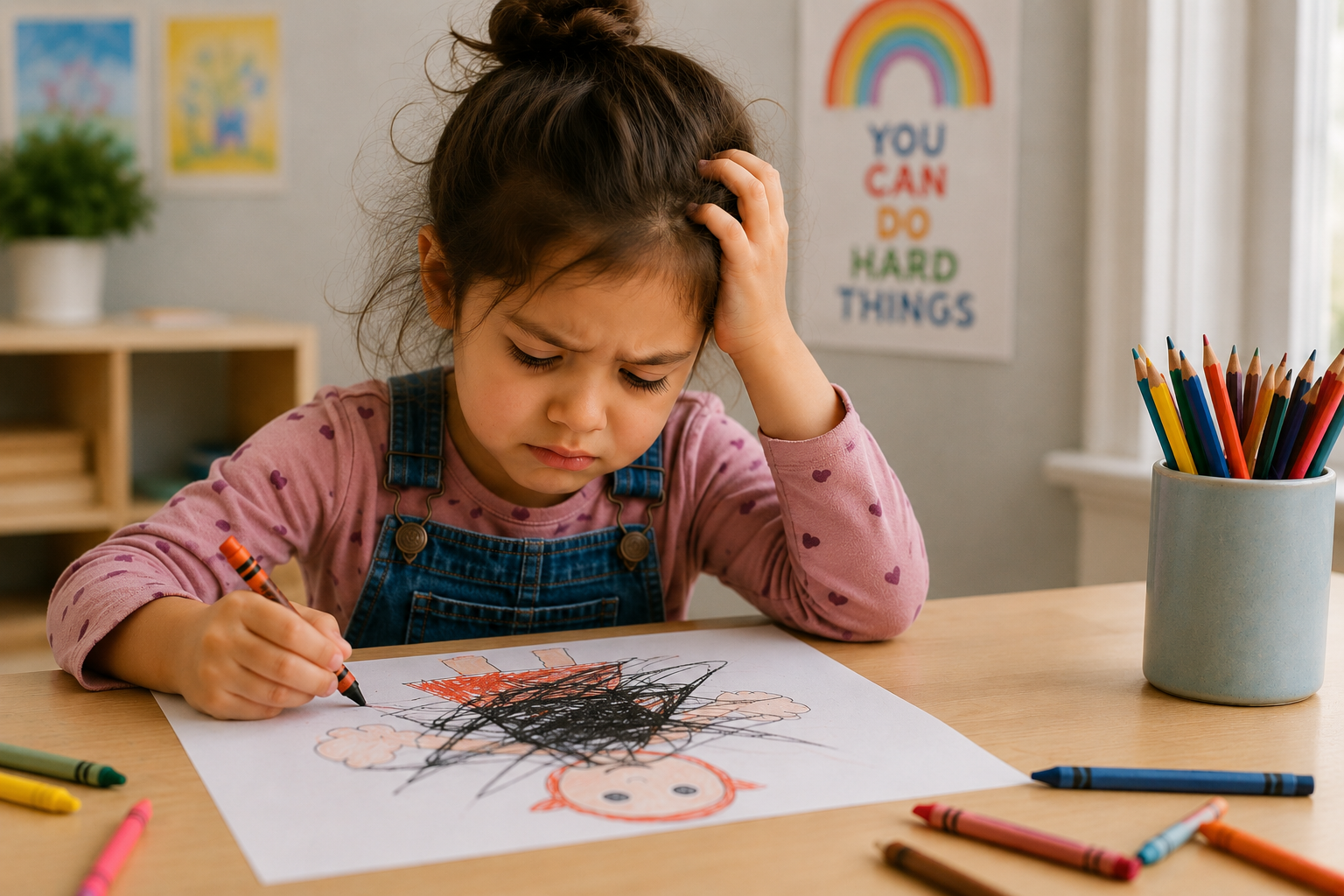
As adults, we know that mistakes are part of learning. Children are going to get answers wrong, lose games, struggle with new skills, forget instructions, spill things, or need repeated practice before something feels easier. We understand that learning is messy.
But for many children, mistakes can feel much bigger than the moment itself.
A spelling error, losing a board game, not being picked first, getting something wrong in class, or finding a task difficult can bring up very big feelings. Some children become tearful, angry, silly, controlling, avoidant, or shut down completely. Others give up before they have even really started. When we slow down and look underneath these reactions, they often make sense.
Sometimes children are not reacting only to the present moment. The experience may connect to many previous moments where they have felt corrected, embarrassed, behind, different, compared to others, or not good enough. Over time, the brain begins storing these emotional experiences. This is especially important to understand for neurodiverse children.
Many autistic children, children with ADHD, anxiety, learning differences, or PDA profiles move through the world carrying invisible emotional and nervous system demands every day. Some children are working incredibly hard just to keep up, manage expectations, cope with sensory overwhelm, navigate friendships, or hide how difficult things feel inside. Many children quietly carry the experience of feeling “different” long before adults fully recognise it. Over time, repeated experiences of frustration, correction, comparison, misunderstanding, or feeling like they are getting things wrong can begin to leave emotional bruises. Sometimes children begin expecting failure before they have even started. This is where mistakes stop feeling like small learning moments and begin to feel emotionally unsafe.
The brain’s job is to protect us. When difficult emotional experiences happen repeatedly, the brain begins looking out for signs that those uncomfortable feelings might happen again. The brain starts asking:
· “What if I fail?”
· “What if everyone notices?”
· “What if I get it wrong again?”
· “What if I’m not good enough?”
For some children, this protective system becomes highly sensitive. Mistakes no longer feel like a simple part of learning. They begin to feel threatening to the child’s sense of self. This can slowly shape an inner critical voice. Parents may hear children say:
· “I’m dumb.”
· “I can’t do it.”
· “Everyone else is better than me.”
· “I hate losing.”
· “I’ll never get this right.”
These moments can be heartbreaking to witness. Often underneath these words is a child carrying feelings of shame, vulnerability, fear of failure, or fear of disappointing others.
In the play therapy room or at home, these themes often emerge in subtle ways. Some children avoid games they might lose. Some become highly competitive or controlling during play. Others change the rules so they can stay emotionally safe. Some children become distressed if their creation does not look “perfect.” Others refuse to attempt activities altogether because not trying feels safer than risking getting it wrong.

Sometimes what looks like defiance is actually protection.
Sometimes what looks like control is fear.
Sometimes what looks like “not caring” is a child trying very hard to protect a fragile sense of self.
This is why confidence and perfectionism are not the same thing. A child who always needs to win, be first, get everything right, or avoid mistakes may not necessarily feel confident inside. Sometimes these behaviours are ways children try to protect themselves from uncomfortable feelings. Perfectionism often says:
· “I must get it right.”
· “I cannot fail.”
· “Mistakes are bad.”
· True confidence sounds very different.
· True confidence says:
· “I can try.”
· “I can make mistakes and recover.”
· “I can ask for help.”
· “I can cope when things feel hard.”
· “I can keep going even when I feel frustrated.”
Children who fear mistakes often need adults to help hold this belief for them before they can hold it themselves.
Before children can truly believe in themselves, they often need us to believe in them first.
Children build confidence through repeated experiences of feeling emotionally safe while they struggle, wobble, make mistakes, and recover. They learn resilience when adults stay calm, connected, and supportive during hard moments.
When a child makes a mistake and the adult responds with warmth rather than shame, the child slowly learns:
· “Mistakes are survivable.”
· “I am still safe.”
· “I am still worthy.”
· “I can try again.”
Children often borrow our calm nervous systems before they can regulate themselves independently. Over time, the compassionate messages they hear from safe adults slowly become part of their own inner voice. This is why co-regulation matters so much.
Children rarely learn well when they feel overwhelmed, ashamed, or emotionally unsafe. When the nervous system moves into fight, flight, freeze, or shutdown, children may refuse tasks, avoid new experiences, become silly, angry, tearful, controlling, or completely disengage. These behaviours are often not about laziness, oppositional behaviour, or a lack of motivation. Often we are seeing a protective nervous system doing its best to keep the child emotionally safe. When we understand this, we begin responding differently.
Instead of rushing straight into correction or problem solving, we can first support the feeling underneath the behaviour:
· “That felt really frustrating.”
· “Oops, that didn’t go the way you hoped.”
· “I can see this feels hard right now.”
· “You’re still learning.”
· “Let’s work through this together.”
These moments help children feel less alone in their struggle.
Parents do not need to remove all frustration or prevent children from making mistakes. In fact, challenge is an important part of growth. But children do need support moving through those moments without becoming overwhelmed by shame or self-criticism.
One of the most powerful things adults can do is shift the focus away from perfection and toward bravery, effort, flexibility, persistence, and recovery. Children benefit from hearing:
· “You kept trying even though it felt hard.”
· “You were brave to have a go.”
· “I noticed you came back after taking a break.”
· “You found another way.”
· “Mistakes help our brains learn.”
It can also help when adults model their own mistakes openly and compassionately. When children hear:
· “I made a mistake.”
· “That didn’t go how I planned.”
· “I’m still learning too.”
They begin to understand that mistakes are part of being human rather than something to fear.
Reducing pressure and comparison can also make a significant difference. Many children are already comparing themselves heavily to peers, siblings, or expectations around them. Helping children focus on their own growth, rather than always being “the best,” can support healthier confidence over time.
Confidence does not grow from always succeeding. Confidence grows when children experience challenge, support, repair, recovery, and the opportunity to try again. Over time, children slowly begin to shift from: “I can’t do this” to “I’m still learning.” And often, that shift begins with calm, connected adults who help children feel safe enough to make mistakes along the way.